
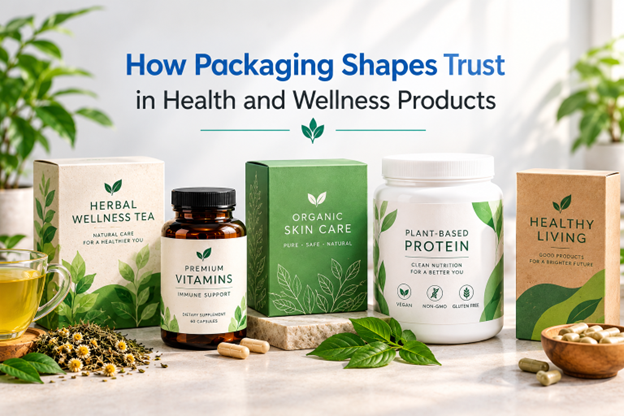
Choosing a health or wellness product is often a personal decision. Whether someone is buying nutritional supplements, herbal products, skincare items, or everyday wellness essentials, they want to feel confident about what they are purchasing. Product quality matters most, but packaging also influences how people understand a product and form their first impression of the brand.
In a crowded marketplace, packaging does more than make a product look attractive. It helps communicate essential information, protects the contents during storage and transportation, and gives customers a clearer idea of what to expect. When these details are handled carefully, packaging can support consumer confidence without relying on exaggerated promises or flashy designs.
Why First Impressions Matter in the Wellness Industry
Customers cannot always judge the quality of a supplement or wellness product simply by looking at it. They often rely on the information provided by the manufacturer, the condition of the package, and the overall presentation when deciding whether a product feels credible.
Packaging that looks clean and professionally organised can make important details easier to find. In contrast, unclear labels, damaged cartons, or inconsistent branding may leave customers with unanswered questions. For products that require careful storage and clear identification, Custom Medicine Boxes can help organise essential product information while providing an additional layer of protection during handling and transportation.
This does not mean attractive packaging automatically proves a product is safe or effective. Instead, a good presentation should support accurate information, appropriate product protection, and responsible handling.
Health and wellness brands can strengthen their first impression by focusing on a few practical details:
- Clear product identification: Customers should quickly understand what the product is and what it is intended for.
- Readable information: Ingredients, directions, warnings, and other relevant details should be easy to locate.
- Consistent branding: A recognisable design helps customers distinguish genuine products from unfamiliar alternatives.
- Protective packaging: Suitable materials and secure closures help maintain the product’s condition during handling and delivery.
These details may appear simple, but together they can make the buying experience clearer and more reassuring.
Clear Labels Help Customers Make Informed Decisions
One of the most important roles of packaging is communicating information accurately. Health-related products may contain ingredients that customers want to check carefully, particularly when they have dietary preferences, allergies, or specific usage requirements.
A well-organised label helps people find relevant information without having to search through crowded text. Businesses should avoid placing decorative graphics or promotional messages above essential product details.
Depending on the product and applicable regulations, useful information may include:
- Product name and intended use
- Ingredients and relevant allergen information
- Directions for use and storage instructions
- Expiry dates, batch details, and manufacturer information
- Required warnings and regulatory statements
The exact requirements vary by product category and market, so businesses should verify the rules that apply to their products before printing packaging.
Clear communication also means avoiding claims that cannot be substantiated. A wellness product should not be presented as a guaranteed treatment or cure unless the claim is properly authorised and supported. Honest information helps customers make decisions based on facts rather than unrealistic expectations.
How Protective Packaging Supports Product Quality
Packaging must do more than communicate a brand’s message. It also needs to suit the product inside it. Exposure to moisture, light, heat, air, or rough handling can affect certain products, depending on their formulation and storage requirements.
For this reason, businesses should select packaging materials according to the product’s characteristics rather than choosing a design based on appearance alone.
For example, some supplements require packaging that limits moisture exposure, while certain skincare products benefit from containers designed to reduce contamination during use. Products shipped over long distances may also need stronger outer packaging to reduce the risk of damage.
Health and wellness packaging should therefore be considered as part of a wider product-protection strategy. The outer box can help protect a container from impacts during transportation, while the primary packaging must provide the protection appropriate to the contents.
Also read: What Is Full Arch Dental Photogrammetry? A Simple Guide for Patients
Businesses should assess factors such as:
- The product’s sensitivity to environmental conditions
- The expected storage and transportation environment
- The strength and suitability of packaging materials
- The risk of leakage, breakage, or tampering
- Any special handling or storage instructions
Choosing suitable packaging can reduce avoidable damage and help products arrive in the condition customers expect. However, packaging alone cannot guarantee product safety; proper manufacturing, testing, storage, and quality control remain essential.
The Connection Between Packaging Design and Brand Credibility
Visual design influences how customers recognise and remember a business. In the wellness market, a consistent appearance can help a brand communicate professionalism while making its products easier to identify.
Colours, typography, logos, and layout should work together rather than compete for attention. A brand selling herbal products might choose a natural visual style, while a business offering science-focused nutritional products may prefer a more structured and modern design. Neither approach is automatically more trustworthy; the important factor is whether the presentation suits the product and communicates information clearly.
Packaging should also remain consistent across different products within the same range. When customers can recognise a brand’s visual identity across its supplements, skincare products, or wellness essentials, shopping becomes more straightforward.
Businesses can maintain that consistency by establishing basic design guidelines covering:
- Logo placement and approved brand colours
- Font styles and minimum readable text sizes
- The arrangement of product information
- Packaging dimensions and material finishes
- The visual differences between product varieties
A consistent design system makes it easier to introduce new products without making the overall brand appear disconnected.
Why Packaging Matters in Online Wellness Shopping
Online customers face a different challenge from people shopping in physical stores. They cannot inspect the product directly before buying, so product photographs, descriptions, reviews, and packaging images help shape their expectations.
When an order arrives, the condition of the package becomes part of the customer’s experience. A crushed box, leaking container, or poorly secured product can create frustration even when the item itself is undamaged.
Businesses can improve this experience by testing their packaging before using it for regular shipments. Packages should fit their contents appropriately, provide adequate cushioning where necessary, and remain practical for storage and delivery.
Thoughtful presentation can also make the unboxing experience feel organised. Neatly arranged products, clear instructions, and simple branded details may help customers feel that their order has been handled with care.
The aim is not to add unnecessary layers or expensive decorations. It is to deliver the product securely while keeping the experience convenient for the customer.
Balancing Sustainability With Product Protection
Environmental considerations are becoming an important part of packaging decisions. Some customers prefer businesses that minimise unnecessary materials, reduce waste, and consider the environmental impact of their packaging choices.
However, health and wellness brands must balance these goals with the need to protect their products. A material that appears environmentally preferable may not be suitable if it allows moisture to enter or fails to protect a fragile container.
Businesses can begin with practical improvements, including:
- Selecting appropriately sized outer boxes to reduce wasted space.
- Avoiding unnecessary inserts and decorative layers.
- Evaluating recyclable materials that meet the product’s protection requirements.
- Checking whether local recycling facilities accept the chosen materials.
- Reviewing packaging performance before making changes across an entire product range.
Environmental claims should also be specific and accurate. Clear explanations of material composition and disposal options are more useful than broad claims that a package is completely eco-friendly without supporting evidence.
How Businesses Can Improve Their Packaging Strategy
Improving packaging does not always require a complete redesign. Businesses can begin by reviewing their existing products and identifying where customers or fulfillment teams experience difficulties. Choosing suitable Custom Packaging Boxes can help businesses improve product protection, organise packaging dimensions, and create a consistent presentation that aligns with their brand identity.
Customer feedback can reveal problems that may not be obvious during the design process. Repeated complaints about damaged deliveries, confusing instructions, or excessive wrapping can point towards practical improvements. By addressing these issues and testing suitable packaging options, businesses can create a smoother customer experience while keeping packaging costs under control.
A simple review process can help businesses decide where to focus their efforts:
- Review customer feedback: Identify recurring concerns about product presentation, damage, or usability.
- Check label clarity: Make sure important information is readable and arranged logically.
- Test packaging performance: Assess how products withstand ordinary storage, handling, and shipping conditions.
- Compare material options: Consider protection, cost, usability, and disposal requirements together.
- Measure the results: Monitor damage reports, returns, customer comments, and packaging costs after making changes.
Businesses can test improvements on selected products before introducing them throughout their range. This approach helps them make informed decisions without creating unnecessary costs or disrupting existing operations.
Conclusion
Packaging plays an important role in shaping how customers understand and experience health and wellness products. Clear labels help people find essential information, suitable materials protect products during handling, and consistent design makes brands easier to recognise. Trust, however, cannot be created through appearance alone. It depends on product quality, accurate information, responsible manufacturing, and reliable customer service. Packaging works best when it supports these foundations rather than attempting to replace them. By focusing on clarity, protection, practicality, and honest communication, health and wellness businesses can create a better experience for their customers while building a more credible and recognisable brand.
Frequently Asked Questions
1. How does packaging shape trust in health and wellness products?
Packaging helps customers understand a product through clear labels, readable information, and professional presentation. Suitable packaging can also protect products during storage and transportation, creating a more reliable customer experience.
2. Why is packaging important for health and wellness brands?
Packaging communicates essential product information, maintains brand consistency, and helps protect items during handling. It also shapes customers’ first impressions of a business.
3. How can custom medicine boxes support product protection?
Custom medicine boxes provide an additional layer of protection against physical damage during storage and transportation. Their effectiveness depends on the materials, design, and protection required for each product.
4. What information should health and wellness packaging include?
Depending on the product and applicable regulations, packaging may include the product name, ingredients, directions for use, warnings, storage instructions, expiry date, batch number, and manufacturer details.
5. Can packaging design influence customer purchasing decisions?
Yes. Clear information, an organised layout, and consistent branding can influence customers’ first impressions. Product quality, price, reputation, and reliable information also affect purchasing decisions.
6. What materials are suitable for health and wellness packaging?
Suitable materials depend on the product’s weight, sensitivity, storage requirements, and transportation conditions. Paperboard cartons and protective outer boxes may be appropriate for different packaging needs.
7. How can wellness brands make their packaging more trustworthy?
Brands can use accurate product descriptions, readable labels, consistent designs, and suitable protective materials. Avoiding misleading claims also helps customers make informed decisions.
8. Why is packaging important for online health and wellness businesses?
Online customers cannot physically inspect products before purchasing. Secure packaging helps reduce shipping damage, while clear information and careful presentation improve the delivery experience.
9. How can businesses reduce waste in health and wellness packaging?
Businesses can choose appropriately sized boxes, reduce unnecessary wrapping, and consider recyclable materials that meet product protection requirements.
10. How often should health and wellness brands review their packaging? Brands should review packaging when products change, regulations are updated, customer complaints increase, or shipping damage becomes more common. Regular reviews help identify opportunities to improve protection, readability, and cost efficiency.