
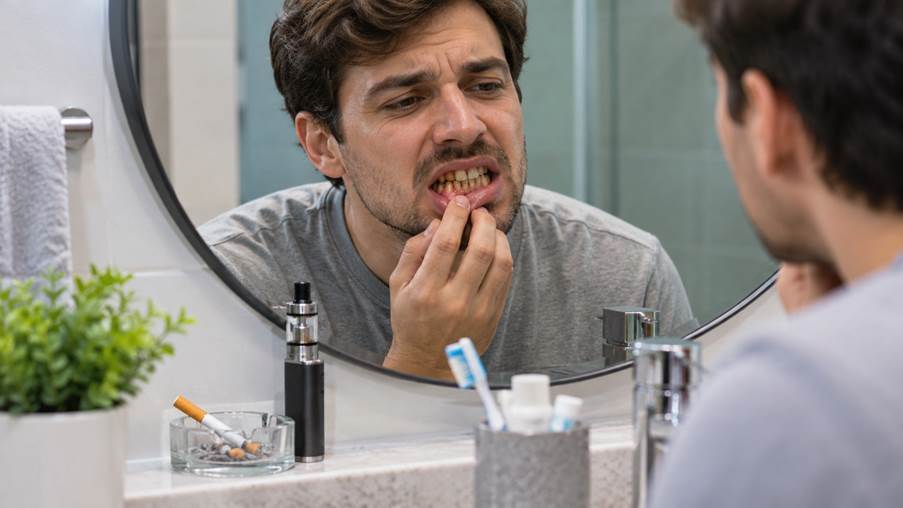
You have a bad taste in your mouth after a meal which disappears as you brush that cigarette. The vape may even be hardly visible at all, especially if there’s no smoke wafting about. However, not all changes in the mouth may be observed in the mirror. Gum problems might be subtle and dry mouth can seem like near thirst. As you know what each habit does to you, regular dental check-ups are important.
Why Your Mouth Is the First Place Smoking and Vaping Leave Their Mark
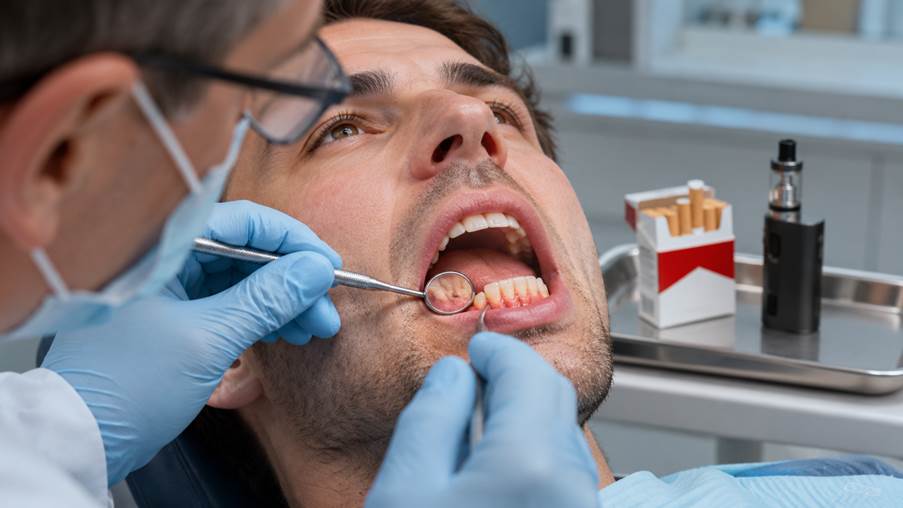
Every cigarette exposes your teeth, tongue and delicate tissue to the smoke. The nicotine and other substances are absorbed by the gums. Tobacco tar produces a characteristic discoloration. People may use mints or mouthwash, yet still have bad breath. You should have no problem seeing these modifications. Some others need more time. The exterior of the mouth might seem relatively clean, but the tissues surrounding the teeth are constantly mending from everyday insults.
A healthy blood flow is needed for the gums to combat infection and repair the usual wear and tear. Smoking disrupts this mechanism. This also raises the chance of oral cancer, which may not be significant discomfort but a sore or peculiar place.
Vaping is the inhalation of an aerosol, not tobacco smoke. They come in a variety of materials, but many include nicotine and other substances that might irritate the tissues in your mouth. It is not harmless but overall it is less dangerous than smoking cigarettes. Scientists are studying the longer-term effect on teeth and gums.
How Smoking Damages Teeth, Gums and Tissue
The first thing smokers notice is their teeth becoming yellow. Stains build up over months and years, particularly around crowded teeth that are difficult to clean. A hygienist can remove some of the surface stains, but it’s not going to fix any damage below the gum line, he explains.
Smoking interferes with your gum tissue’s capacity to repair and fight infection. You may take longer to recover after a tooth is pulled or you are treated for gum disease. If you’ve had a tooth extracted, be sure to follow the dentist’s recommendations for care for the site following the procedure. Smoking might affect socket healing. At the same time, If you smoke you are also more likely to have trouble with oral surgery.
There is, however, one more impediment and this is not so simply gotten over. Smoking may lessen bleeding from inflamed gums, thus a smoker may not notice a lot of blood while brushing his teeth even if he has gum disease. All blood is not safe.
Also mouth lining modifications need notice. Smoking increases the chance of oral cancer and perhaps dangerous patches. Not another week of antiseptic mouthwash. A non-healing ulcer is unique.
As for your teeth, In fact, ipswich dental implants can be of valid aid if it’s a challenging matter.
What Vaping Does to Your Mouth: Dryness, Gum Irritation and Decay Risk

Dry mouth vapers commonly have dry mouths. Waking up with a dry mouth or a sticky feeling may not seem like a big deal, but a sip of water may help. But saliva is a vital ingredient. It helps to maintain the pH, preserves the enamel of the teeth in excellent condition and washes away the food particles. Saliva also helps neutralize acidity after consuming foods. If there’s not enough of it there, the same chewing may leave teeth more vulnerable to acid assaults.
Dry mouth may make it hard to eat and talk. The air was foul, that was certain. Also, the conditions might cause considerable harm to the teeth, particularly if the same behavior involves frequent consumption of sugary foods or drinks.
Some study has linked vaping to higher risk of tooth decay and alterations in gum health. But the research is mostly observational, therefore does not prove that vaping caused each disease. Difficult to compare with past cigarette consumption and changes in vaping.
For adult smokers, a full switch to vaping may frequently reduce their exposure to tobacco smoke toxins. Both still smell like cigarette smoke. If you don’t smoke, there’s no dental reason to begin vaping.
Also read: What Is Full Arch Dental Photogrammetry? A Simple Guide for Patients
The Link Between Tobacco Use, Gum Disease and Tooth Loss
Gum disease is usually on one side of the tooth. Plaque may build up in places that your toothbrush can’t reach. They then make the surrounding tissue swell. In the early stages you may minimize some of the irritation but beyond the gum line the illness may spread.
Periodontal disease is the breakdown of the supporting tissues and bone surrounding the teeth. More bacteria are found between the teeth and the gums. You may feel the tooth wiggle or loosen a bit when you eat. Brushing teeth at this time often will not restore the bone that is lost.
Smoking is a risk factor for significant gum disease and makes treatment less predictable. A smoker might come in for routine cleaning and not be aware of deeper pockets. The dentist may see these changes by probing around each tooth during a check-up. Dental X-rays also might find bone problems that could be hard to see with a quick look in the mirror. It is not necessary to lose teeth. Prognosis may be improved with competent treatment, regular cleaning and cessation of smoking. Now, if you stop the habit, you could require long-term treatment for bone loss that already exists.
Warning Signs in Your Mouth You Should Never Ignore
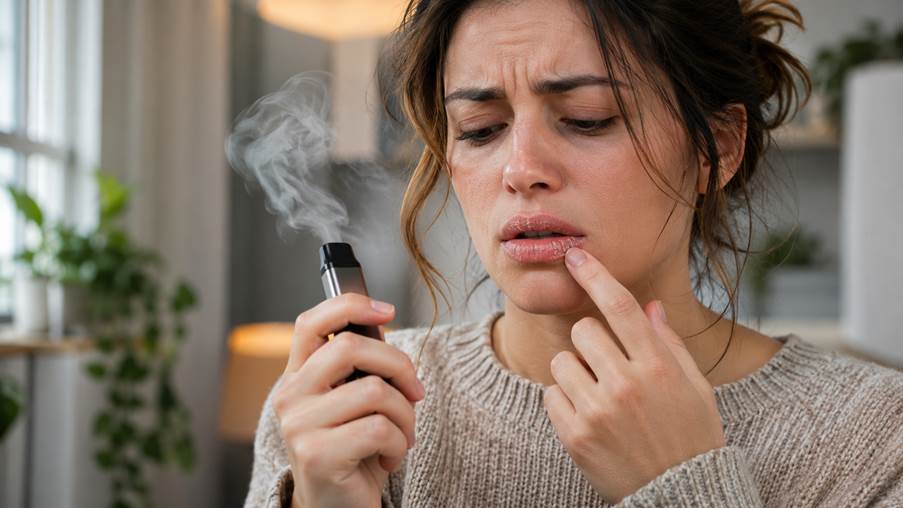
A tiny, painful, ulcer on the face will heal well. If the soreness persists for 3 weeks this is not normal and should be addressed to the dentist or GP. If the lesion is appearing odd or becoming worse, get advice sooner.
Changes inside the cheek or on the back of the tongue may not be uncomfortable and might go untreated for weeks. Other changes to think about are:
- Red or white areas that don’t clean up
- Swollen gums and/or receding gums Gums that bleed
- loose or unsteady teeth foul breath or a nasty taste that doesn’t go away
- Sores in your mouth or problems swallowing.
The indications may not necessarily indicate cancer or serious gum disease. Sharp filling, medicine or other medical conditions. But you should see the dentist to differentiate between normal discomfort and inflammation that requires treatment.
If you have abrupt swelling, difficulties breathing or trouble swallowing, contact your doctor immediately. To wait for your regular dentist checkup might be harmful.
How Smokers and Vapers Can Protect Their Oral Health
The most obvious long term advantage is that you will have quit smoking. For most long-term smokers quitting doesn’t happen with one choice. Instead they make several attempts. Ask your pharmacist, GP or quit smoking program to help you and provide you the correct nicotine replacement medicines.
Still, quitting is a daily exercise of self-care. A quick brush before bed isn’t going to clean the plaque between the back teeth. You see, you need to follow these methods practically:
- Brush your teeth twice a day using fluoride toothpaste. Brush for 2 minutes.
- Floss or use interdental brushes to clean between your teeth.
- Brush, spit but don’t rinse rapidly and wash the fluoride away.
- If your mouth is dry, drink lots of water. Go to the dentist when he tells you.
Dentists should inquire about smoking and vaping prior to tooth extraction, gum repair and implant insertion. This information lets us assess hazards to healing without assuming a patient. Regular checks might pick up little alterations before they become permanent.
Conclusion
You might have gum damage without any pain at all. You can get some discolouration and a dry mouth. There’s a lot you can do. You can stop smoking. You can take care of your teeth. If you are contemplating dental implants to replace a missing tooth, you will need to discuss any tobacco or vaping addictions you have during your evaluation. These are factors of the choice of treatment that may influence healing and periodontal health.