
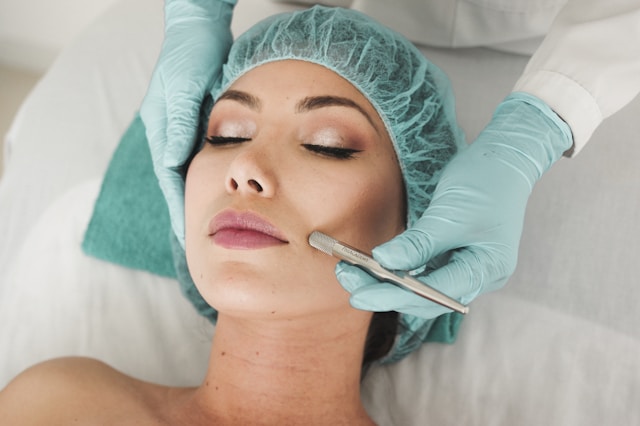
For those who want youthful, glowing skin, chemical peels have long been a popular option in the skincare world. From improving acne scars, to hyperpigmentation and overall aging, chemical peels can provide excellent results that are relatively quick with surface level downtime, especially when conducted by experts in a trustworthy medical spa. In this resource, we will cover everything you need to know as a first-time patient, your options between different types of chemical peels, benefits to the treatment, and what to expect when recovering.
What Is a Chemical Peel?
A chemical peel is a cosmetic treatment that exfoliates the skin and removes the outer layer of skin. In other words, a chemical peel is a solution that is applied to the skin to take off (exfoliate) the outermost layer of skin to increase cell performance and induce new skin growth that is more “healthy.”
Chemical peels are typically used for:
- Fine lines and wrinkles
- Hyperpigmentation and sun damage
- Acne and acne scarring
- Uneven tone or texture
- Large pores
Different Types of Chemical Peels
Determining the different kinds of chemical peels is important in getting the best option for your skin care concerns. Some of the types are:
1. Superficial Peels
Also known as light peels, superficial peels are mild acid peels, including alpha-hydroxy acids (AHAs) and beta-hydroxy acids (BHAs), that help to exfoliate the outer layer of skin. Superficial peels help refine skin imperfections like dull skin, scattered discolored areas, and rough skin.
- Best used for: First time peel patients, sensitive skin patients, someone wanting to achieve a quick skin refresh
- Downtime: Minimal with some possible redness/flaking.
2. Medium Peels
Medium depth peels most often use trichloroacetic acid (TCA) to penetrate the medium layers of skin. Medium depth peels are more aggressive and can help treat skin disorders like moderate wrinkles, acne scarring, and pigmentation issues.
Best used for: More significant skin areas that need more aggressive exfoliation
Downtime: 5–7 days of redness, peeling and possibly some swelling.
3. Deep Peels
Deep chemical peels use higher concentrations of acids like phenol and will penetrate deeper skin layers. Deep chemical peels create dramatic results for patients with deep wrinkles, severe sun damage, and long-term scarring.
- Best for: Major skin resurfacing with long-term results
- Downtime: 10-14 days, plus more intensive
Benefits of Chemical Peels
Chemical peels provide various benefits that apply beyond aesthetics. So now that we have gotten through all that, here is a brief list of reasons to consider this treatment:
1. Changes in Skin Texture and Tone
Chemical peels exfoliate the skin and promote the generation of new skin cells causing a smoothing of the surface of the skin and an evening of a tone to the skin.
2. Reduced Fine Lines and Wrinkles
Particularly with respect to your medium and deep peels, chemical peels promote your body to produce collagen and over time reduce the visible appearance of fine lines.
3. Fewer Breakouts
With the superficial peels, the BHAs are fantastic at unclogging pores and controlling oil, making superficial peels beneficial for patients with acne prone skin.
4. Better Absorption Rates for Skincare Products
Freshly exfoliated skin absorbs further moisturizers, serums, and skincare products, making them more effective.
5. Longer-lasting results
Depending on the type of peel, you may see improvements in your skin with minimal down time.
Also read: Revolutionize Your Makeup Routine with the Latest Concealer Trends
What to Expect: Before, During and After a Chemical Peel
Before the Peel
You must have a consultation at a medical spa. A licensed skincare professional will check your skin type, look at medical history, and discuss your goals in determining the best peel for you.
During the Peel
The chemical peel process usually takes 30-60 minutes. When the solution is applied to the skin, you may feel tingling or a warming sensation. The chemical is neutralized or washed off when your provider feels the peel has reached adequate depth.
After the Peel
The most critical part is post-peel planning- it helps achieve the best outcome and avoid complications:
- You’ll be more sun-sensitive, so it is important to wear sunscreen
- Use a mild and non-comedogenic moisturizer
- Be patient! Allow the skin to shed naturally rather than picking or peeling it.
- Follow your professional’s instructions
Why Choose a Medical Spa?
When you elect to receive chemical peels at a licensed Medical Spa you can be sure that you will receive a treatment that is tailored to your skin type, safe, and effective. Chemical peels at medical spas are much more advanced than the over-the-counter peels and are performed by trained professionals with medical-grade products.
Final Thoughts
Chemical peels are an excellent addition to any skincare routine for a youthful appearance with fairly simple procedures. Whether you are a beginner or someone who is interested in expanding your skincare regimen, a medical spa that you can trust to perform chemical peels Frisco will facilitate meeting your skin goals safely and effectively.